Introduction
Savory cocktails are what happen when the bar starts thinking like a kitchen. Instead of building every drink around sugar, citrus, and fruit, the savory style reaches for brine, herbs, vegetables, salt, pepper, tomato water, olive oil, tea, miso, seaweed, or vinegar. The result can be quiet and elegant or bold and snack-like, but it always asks the same question: what if a cocktail refreshed the palate the way a good appetizer does?
The Martini and Bloody Mary have always hinted at this direction. Today's savory drinks stretch the idea further. They can be crystal clear, garden fresh, saline, herbal, or deeply umami, and they often pair better with food than sweeter cocktails do.
This does not mean every savory cocktail has to taste like soup or salad. The most elegant examples use savory details as seasoning. A few drops of saline, a spoon of olive brine, or a rinse of sherry can change the shape of a drink without making it heavy. The appeal is subtlety: the cocktail feels drier, more aromatic, and more connected to the table.
Why It Is Trending
Drinkers are becoming more comfortable with cocktails that are not dessert-like. Restaurants have also pushed the movement forward because savory drinks can sit naturally beside seafood, vegetables, cheese, charcuterie, and small plates. A briny, herbal cocktail can make dinner feel more connected than a sweet sour served out of context.
The trend also reflects a growing interest in texture and culinary technique. Clarified tomato water, olive brine, herb oils, vinegars, and pickling liquids give bartenders a pantry of flavors that behave differently from fruit syrup. They add depth without always adding weight.
There is also a practical reason savory cocktails are gaining ground. Many drinkers are looking for alternatives to sweet, citrus-heavy menus. A briny Martini variation or a vegetable highball gives them something refreshing that does not taste like juice. It feels mature without being severe.
Flavor Profile
A successful savory cocktail needs precision. Salt can make flavors pop, but too much turns the drink heavy. Brine can be refreshing, but it needs acidity or bitterness to stay clean. Herbs add aroma, while vermouth gives a soft wine-like body.
Gin is a natural base because its botanicals connect easily to cucumber, olive, rosemary, basil, and pepper. Vermouth adds gentle bitterness and keeps the drink lower in strength. The best savory drinks finish dry and leave you wanting food.
Umami is useful because it lengthens flavor. Tomato, mushroom, seaweed, miso, and aged vinegar can make a drink feel rounder even when used in tiny amounts. The challenge is clarity. A savory cocktail should still feel like a cocktail, with lift, chill, and a clean finish.
Signature Recipe
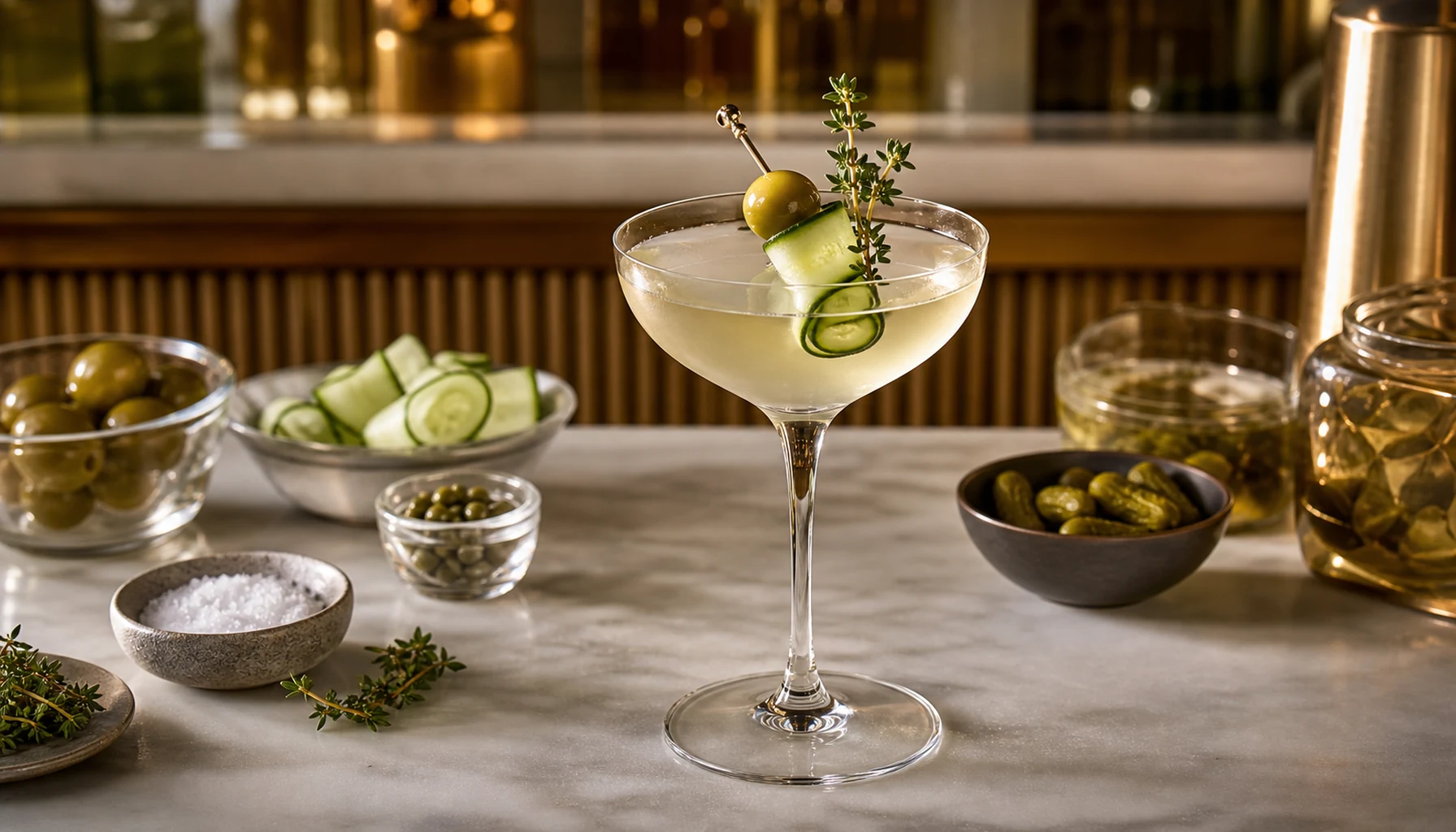
This briny garden Martini keeps the familiar Martini structure but softens it with cucumber and a restrained touch of olive brine.
Ingredients:
- 1 1/2 oz gin
- 1 oz dry vermouth
- 1/4 oz olive brine
- 2 cucumber slices
- 2 drops saline solution
- Olive for garnish
- Cucumber ribbon for garnish
Instructions:
- Add the cucumber slices to a mixing glass and press gently with a muddler.
- Add gin, dry vermouth, olive brine, saline, and ice.
- Stir until very cold and properly diluted.
- Fine strain into a chilled coupe or Nick and Nora glass.
- Garnish with an olive and a cucumber ribbon.
Variations to Try
For a coastal version, add a tiny pinch of dried seaweed or use a seaweed tincture. For a garden version, replace the olive brine with celery bitters and garnish with basil. For a richer drink, add one bar spoon of fino sherry.
You can also move the format toward a highball. Build gin, dry vermouth, cucumber water, and tonic over ice, then season with a few drops of saline. It becomes lighter, greener, and easier to serve with food.
For a tomato-water version, stir gin, dry vermouth, clarified tomato water, and a few drops of sherry vinegar over ice. For an olive-oil version, shake gin with lemon and a tiny measure of simple syrup, then float two drops of good olive oil on the surface. In both cases, the savory element should be clear but controlled.
Serving Tips
Chill everything. Savory flavors can feel muddy when they warm up, especially brine and vermouth. Use fresh vermouth and store it in the refrigerator. Taste your brine before adding it, because olive brines vary widely in salt and acidity.
Serve savory cocktails with snacks. They shine next to oysters, olives, salted almonds, grilled vegetables, potato chips, and sharp cheese. The pairing is part of the pleasure.
Use the smallest possible amount of assertive ingredients at first. Brine, vinegar, and miso can dominate quickly. Build the drink, taste it, and adjust by drops rather than ounces. If the drink feels dull, add acid. If it feels sharp, add vermouth. If it feels hollow, add saline.
Conclusion
Savory cocktails are not a gimmick. They are a reminder that balance can come from salt, herbs, acidity, and umami as much as sugar and fruit. When handled with care, a savory drink feels precise, refreshing, and deeply grown-up. It turns the cocktail glass into a small plate before the meal begins.