Introduction
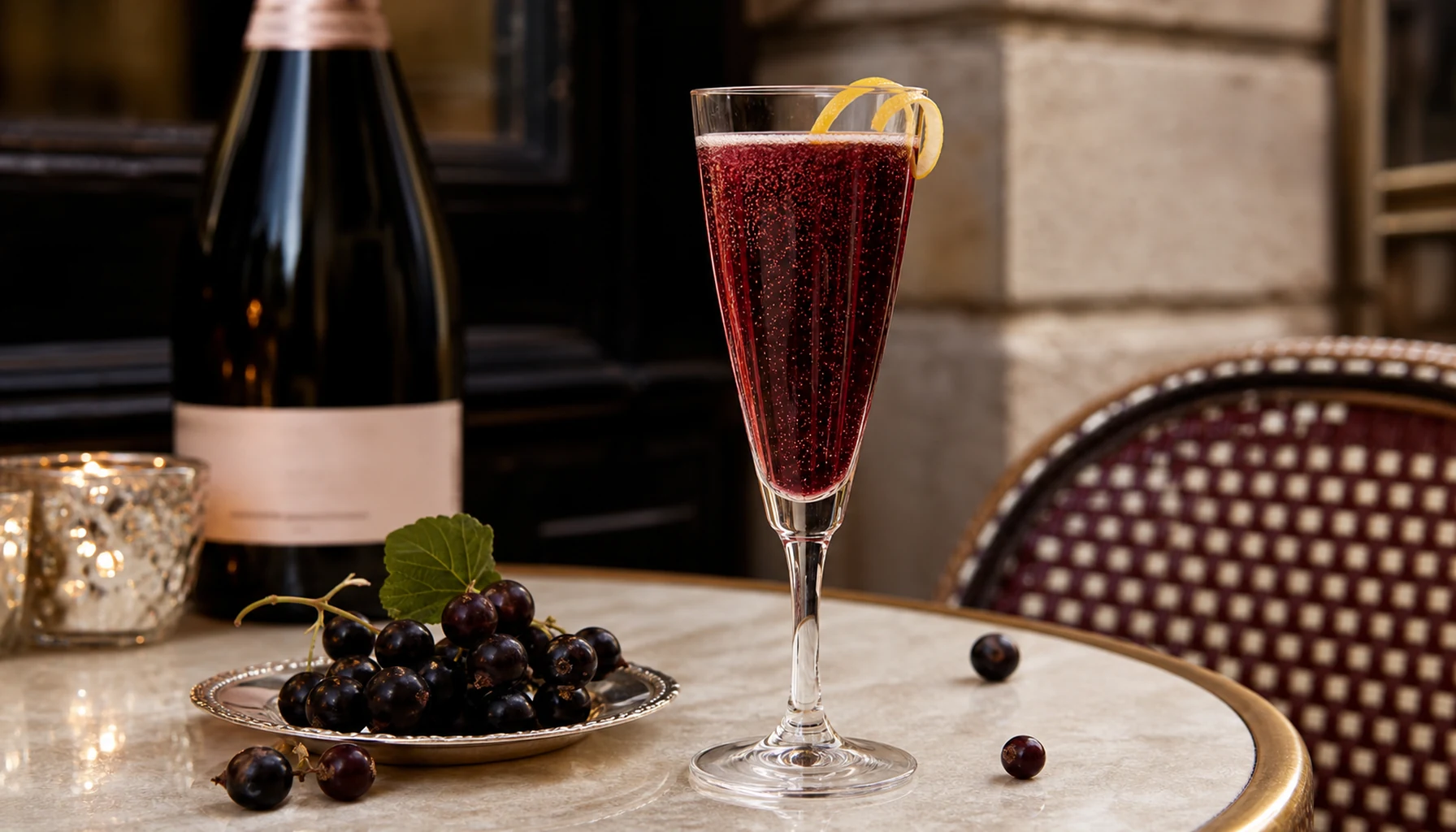
The Kir Royale is one of France's simplest elegant drinks: a small measure of creme de cassis lifted by cold Champagne. It has the confidence of a cocktail that does not need much decoration. The color is deep ruby, the aroma is blackcurrant, and the finish should stay dry enough to belong before dinner.
Its charm comes from restraint. Too much cassis turns the drink heavy; too little disappears under the wine. When the balance is right, the Kir Royale tastes like Burgundy fruit meeting Champagne structure. It is festive without being loud, sweet without becoming dessert, and unmistakably European in its aperitif sensibility.
The drink also shows how much can happen in a glass without shaking or stirring equipment. It is a lesson in proportion: fruit liqueur as accent, sparkling wine as architecture, and cold temperature as the final polish. Nothing in the recipe is hidden, so each ingredient has to be chosen with care.
European Character
The Kir Royale carries two strong French signals in one glass. Cassis points toward Burgundy, where blackcurrant liqueur has long been part of regional drinking culture. Champagne brings the ritual of celebration, but in this drink it is not used only for luxury. It provides acidity, dryness, and texture.
That makes the Kir Royale a useful addition to a cocktail collection full of stronger classics. It is not spirit-forward like a Martini, bitter like a Negroni, or tropical like a Mai Tai. It belongs to the European wine-based aperitif tradition, where the glass is shaped around appetite, elegance, and conversation.
It also feels especially French because it treats wine as the foundation rather than the background. The cocktail is not trying to disguise Champagne. It is seasoning it with blackcurrant and turning a familiar celebratory wine into something darker, more aromatic, and more aperitif-driven.
Flavor Profile
A proper Kir Royale is berry-rich at the opening and dry at the finish. Creme de cassis brings blackcurrant, jam, and a little tartness. Champagne cuts through that fruit with acidity and fine bubbles. The drink should feel polished rather than sticky.
The choice of sparkling wine matters. A very sweet wine can make the cocktail cloying. A crisp brut Champagne or traditional-method sparkling wine keeps the cassis in line. The liqueur should season the wine, not replace it.
The blackcurrant flavor should be vivid but narrow, like a ribbon running through the glass. If the drink tastes like berry soda, reduce the cassis. If it tastes only like plain sparkling wine, add a few drops more. Small adjustments make a large difference.
Signature Recipe
Ingredients:
- 1/2 oz creme de cassis
- 4 oz chilled Champagne
- Lemon twist for garnish
Instructions:
- Chill a flute or small wine glass.
- Add the creme de cassis to the bottom of the glass.
- Slowly top with chilled Champagne.
- Stir once very gently if the cassis settles too heavily.
- Garnish with a thin lemon twist.
Variations to Try
For the classic Kir, replace Champagne with chilled dry white wine, ideally a crisp Burgundy-style white. For a lighter Royale, use only 1/4 oz cassis and let the sparkling wine dominate. For a deeper fruit profile, try a small splash of framboise or blackberry liqueur, but keep the measure restrained.
A modern European bar might serve the drink in a small wine glass rather than a flute. This lets the blackcurrant aroma open more fully and makes the drink feel less formal.
For a less expensive but still elegant version, use a dry Cremant from Burgundy, Alsace, or the Loire. The drink remains French in feeling, and the cassis still has enough acidity around it to stay balanced. Avoid very fruity sparkling wines unless you want a sweeter dessert-leaning version.
Serving Tips
Build the drink directly in the glass and serve immediately. Warm Champagne loses its precision, and cassis tastes heavier as it warms. If serving several guests, measure the cassis into chilled glasses first, then open the sparkling wine at the last moment.
The Kir Royale pairs well with gougeres, Comte, smoked salmon, salted butter radishes, and shellfish. It also works beautifully as the first drink at a holiday meal because it feels celebratory without exhausting the palate.
Pour slowly to preserve the bubbles. If the cassis sits at the bottom, one careful lift with a bar spoon is enough. Do not stir aggressively. The visual gradient is part of the drink's appeal, and the wine will integrate naturally as the first sip is taken.
Conclusion
The Kir Royale is a lesson in European simplicity. Two ingredients create color, aroma, texture, and occasion. When made with a light hand, it shows how aperitif drinking can be graceful and precise without complicated technique. It is France in a glass: regional, sparkling, and quietly glamorous.